Artist Statement (Intention & Process)
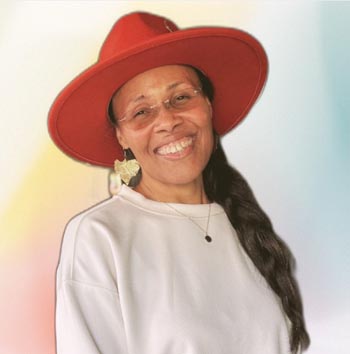
My name is Tonya. I am an intentional artist.
I was born in the Appalachian foothills of North Carolina to a single mother whose brilliance and mental fragility shaped my earliest understanding of the world. We lived with my grandparents—church-going mill workers whose lives were already heavy with loss and survival by the time I arrived. I was their only grandchild, the last living branch of their combined lines, and from an early age I carried more responsibility than most children. My world was one of elders, red clay, hymns, gardens, death, and imagination. We planted, harvested, buried, mourned, and kept going. Death was never abstract in my upbringing.
Because there were no children my age outside of classmates, my inner world grew rich and elaborate. Creativity became my first language of safety. When my mother was hospitalized during severe bipolar schizophrenic episodes, I brought coloring books and sketch pads with me. Art was how I passed time, how I soothed myself, and how I communicated when words were insufficient. I would show my drawings to her—and sometimes to other residents—and in those moments, something softened. I learned early that art could hold people when nothing else could.
My great-aunt Edith—our family’s quilt maker and embroiderer—shared creativity with me like sign language. Threads, patterns, and repetition carried meaning long before I could name it. By high school, teachers like Mrs. Mitten introduced me to Salvador Dalí and M.C. Escher, artists who mirrored what I already sensed: that reality is layered, recursive, and stranger than it appears.
During my senior year of high school, my mother experienced a devastating episode and set fire to my grandparents’ home. My artwork burned with it. But my creativity didn’t die—it went underground, waiting for a new spring, like land after a controlled burn. That pattern has repeated throughout my life. This tension, this push and pull between life and death moved with me beyond high school.
College brought both Jupiter’s expansion and Pluto’s loss. Each year marked another passing. My mother died during the first semester of my senior year; Aunt Edith followed during the short term, like bookends. With each death, something in me deepened. Art stopped being a refuge and became an exploration. In 2009, my first exhibition—Two Sistahs Explore Double Consciousness in Their Postmodern Worlds—included The Lady Death Series, honoring the women/mothers who passed on, and Maman Brigitte, the fierce loa who guards the dead and mothers them fiercely. I was learning that death and devotion are not opposites—that tending to endings is itself a form of love.
Over time, collage, tarot imagery, environmental justice, inner memory landscapes, and spiritual intention moved through my work. After my last grandparents’ passing and a return to the South, new forms emerged—dream-focused collage, later digital experimentation. And then COVID arrived, bringing what felt like the final brush stroke to a forty-year canvas. When my godmother—my last guardian from home—passed, the tether to that world fully released.
That loss opened my midnight of the soul. I asked the question many avoid: Why stay here when so many dear ones have moved on to new realities? What anchors me to this timeline? I surrendered. And the breadcrumbs appeared.
A long-missed medical diagnosis. Three major surgeries. Recovery. A calling into a healing profession I am entering in my mid-forties. A meeting with an astrologer who named truths I had felt but never articulated. A pilgrimage to Mount Shasta that changed me irrevocably. And finally, a shift—from making art to making this work.
I am a creator and a steward first. I work with discernment and care. I do not promise outcomes I cannot ethically guarantee. I channel only what serves coherence. These works are not puzzles to decode; they are intentional objects designed to support resonance—clarity, protection, remembrance, and alignment.
My lineage and place matter. Appalachian red clay. African American ridge runners. Indigenous roots. A celestial thumbprint that echoes land, blood, and tears. I am here to address what my ancestors could not—to hold form where there was fracture, to bring coherence where there was survival.
I engage in this work because it brings me into a state that feels like a deep sigh of relief wrapped in shimmering light. If encountering my work helps someone heal, remember who they are, or feel steadied in their body and spirit— then the piece has fulfilled its purpose.